Agentic AI in 2026: From Hype to Real-World Workflow Partners
joemrnice
•
•
3 min read
•
143 views
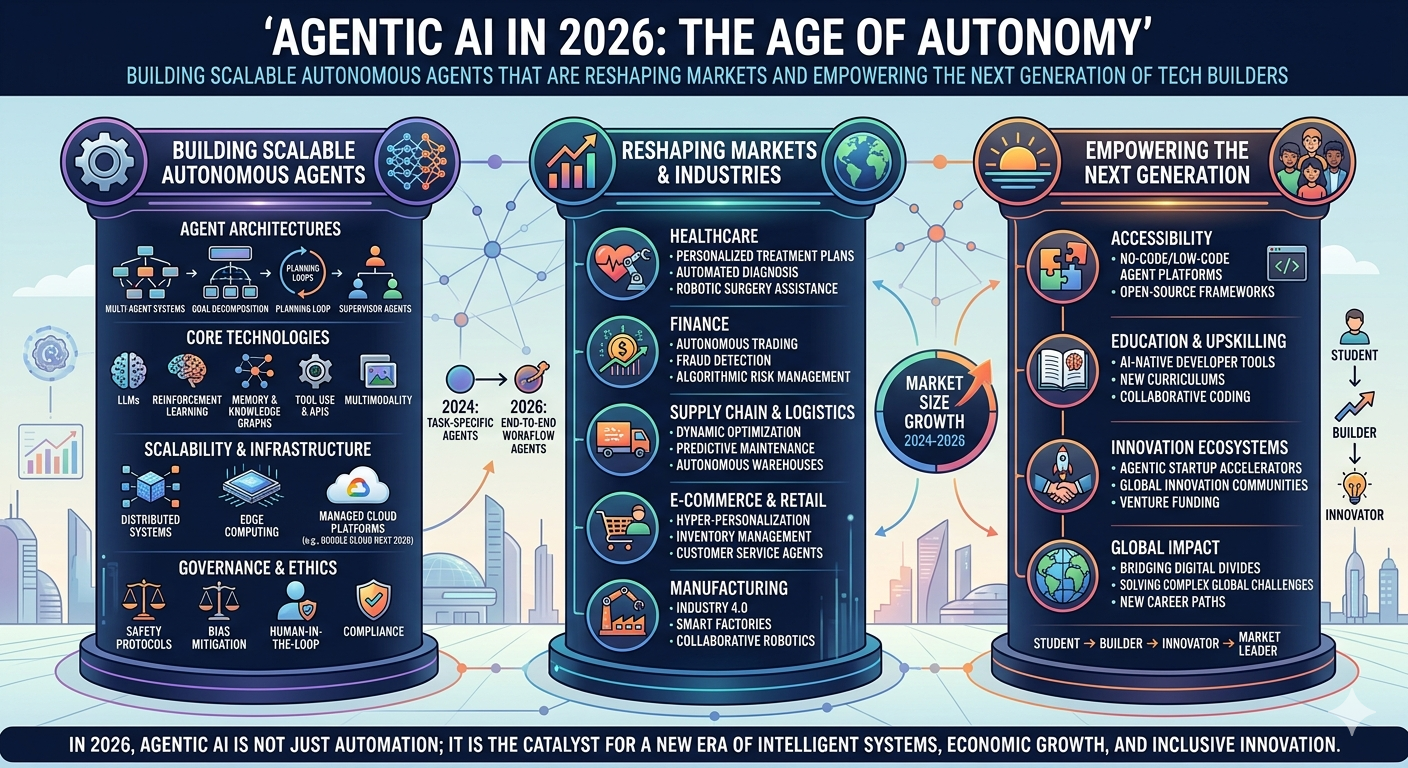
In February 2026, artificial intelligence isn't just generating text or images anymore — it's stepping into the role of a proactive partner. The dominant narrative across reports from Microsoft, IBM, MIT Sloan, Forbes, and others is clear: agentic AI has arrived as the defining shift of the year.
What Is Agentic AI?
Agentic AI refers to autonomous systems that go beyond responding to prompts. These AI "agents" can:
Plan multi-step processes
Make decisions with limited supervision
Use tools (APIs, databases, software)
Execute actions across workflows
Learn from outcomes and adapt
Think of it as evolving from a helpful copilot to a semi-autonomous colleague that handles end-to-end tasks — booking travel while checking calendars and budgets, debugging code across repos, or coordinating supply chains.
Why 2026 Is the Year of Agentic AI
Several converging forces make this the inflection point:
From copilots to autonomous workflows
Early generative AI (2023–2025) focused on single-turn interactions. Now, improvements in context windows, persistent memory, reasoning chains, and interoperability allow agents to handle long-running, complex goals. Microsoft calls it AI becoming a "true partner," while Google Cloud describes the "agent leap" to digital assembly lines.
Real-world deployments accelerating
Enterprises are moving past pilots. Agentic systems now coordinate operations in energy, manufacturing (via digital twins and intelligent automation), healthcare, and software development. IBM highlights new chip designs and open-source reasoning models fueling this enterprise push.
Efficiency & infrastructure maturity
Power and compute constraints are shifting focus from raw model size to optimized inference, agent-specific hardware, and "AI factories." The bubble may be deflating for hype-driven investments (per MIT Sloan), but value-driven agentic adoption is rising.
Workforce & society implications
Leaders face a dual reality: high CEO expectations for growth vs. slower productivity gains and AI-related layoffs outpacing benefits (Harvard Business Review, Gartner). Yet agentic AI promises to augment rather than replace — if organizations build "change fitness" (HBS) and AI literacy.
What Developers & Tech Pros Should Do in 2026
Learn agent frameworks: Tools like LangChain, AutoGen, CrewAI, or emerging open standards for agent interoperability.
Master context & memory engineering: The new skill frontier as models won't differ much in raw capability — orchestration will.
Build hybrid human-AI workflows: Focus on supervision, verification, and ethical guardrails.
Prepare for physical AI convergence: Agentic systems are merging with robotics and IoT (Deloitte's "AI goes physical").
Agentic AI isn't about replacing humans — it's about amplifying what we do best while delegating the repetitive and complex. 2026 marks the transition from experimentation to integration.
What agentic use case excites (or concerns) you most? Share in the comments — let's discuss how this reshapes tech in Sierra Leone and beyond.
About the Author
Written by joemrnice