Understanding DevOps Engineering Workflows: Definition, Tools, and Best Practices
joemrnice
•
•
3 min read
•
130 views
Understanding DevOps Engineering Workflows: Definition, Tools, and Best Practices
In the fast-paced world of software development, DevOps has emerged as a transformative approach that bridges the gap between development and operations teams. This blog post delves into the core of DevOps engineering workflows, providing a clear definition, an overview of essential tools, and additional insights into implementation and benefits.
What is DevOps?
DevOps is a cultural and technical practice that emphasizes collaboration between software developers (Dev) and IT operations (Ops) to automate and streamline the software delivery process. Coined in the late 2000s, DevOps aims to shorten the development lifecycle while delivering high-quality software continuously. At its heart, DevOps fosters a mindset of shared responsibility, where teams work together to build, test, deploy, and monitor applications efficiently.
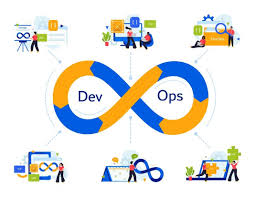
The philosophy is often represented by the infinity loop (∞), symbolizing the continuous integration of development and operations. Key principles include automation, continuous improvement, and rapid feedback loops, which help organizations respond quickly to market changes and user needs.
DevOps Engineering Workflows
DevOps workflows typically follow a structured pipeline that integrates various stages of software delivery. The most common framework is the CI/CD (Continuous Integration/Continuous Delivery or Deployment) pipeline, which automates the process from code commit to production deployment. Here's a breakdown of a typical DevOps workflow:
Planning and Coding: Teams use agile methodologies to plan features. Code is written and version-controlled using tools like Git.
Building and Testing: Code changes are automatically built and tested for bugs, security vulnerabilities, and performance issues.
Deployment: Approved code is deployed to staging or production environments, often with zero-downtime techniques.
Monitoring and Feedback: Post-deployment, applications are monitored for issues, with logs and metrics feeding back into the planning phase for iterative improvements.
Advanced workflows incorporate Infrastructure as Code (IaC), where infrastructure is provisioned and managed through code, enabling scalability and consistency.
Essential DevOps Tools
A robust DevOps toolkit is crucial for implementing these workflows. Here are some popular categories and examples:
Version Control: Git (with platforms like GitHub, GitLab, or Bitbucket) for collaborative code management.
CI/CD Pipelines: Jenkins for orchestration, GitHub Actions for seamless integration with repositories, or CircleCI for cloud-based automation.
Containerization and Orchestration: Docker for packaging applications into containers, and Kubernetes for managing container deployments at scale.
Configuration Management: Ansible, Puppet, or Chef for automating server setup and application configuration.
Monitoring and Logging: Prometheus for metrics, ELK Stack (Elasticsearch, Logstash, Kibana) for logging, or Grafana for visualization.
Collaboration Tools: Slack or Microsoft Teams for communication, integrated with tools like Jira for issue tracking.
In 2026, emerging tools like ArgoCD for GitOps-driven deployments and Tekton for Kubernetes-native pipelines are gaining traction, reflecting the shift toward cloud-native and AI-assisted automation.
Benefits and Best Practices
Adopting DevOps workflows offers numerous advantages, including faster time-to-market, improved reliability, and reduced failure rates. Organizations like Amazon and Netflix have scaled massively thanks to DevOps principles.
To succeed, follow these best practices:
Start small: Implement DevOps in one project before scaling.
Automate everything: From testing to deployments to minimize human error.
Foster culture: Encourage cross-team collaboration and continuous learning.
Measure success: Use metrics like deployment frequency, lead time for changes, and mean time to recovery (MTTR).
Ensure security: Integrate DevSecOps to bake security into the pipeline early.
In conclusion, DevOps engineering workflows are not just a set of tools but a holistic approach to software delivery. By embracing them, teams can achieve greater efficiency and innovation in an ever-evolving tech landscape.
About the Author
Written by joemrnice
Related Posts

Agentic AI in 2026: From Hype to Real-World Workflow Partners
February 8, 2026

Beyond the Hook: Navigating the Catastrophic Reality of Phishing Attacks
February 10, 2026